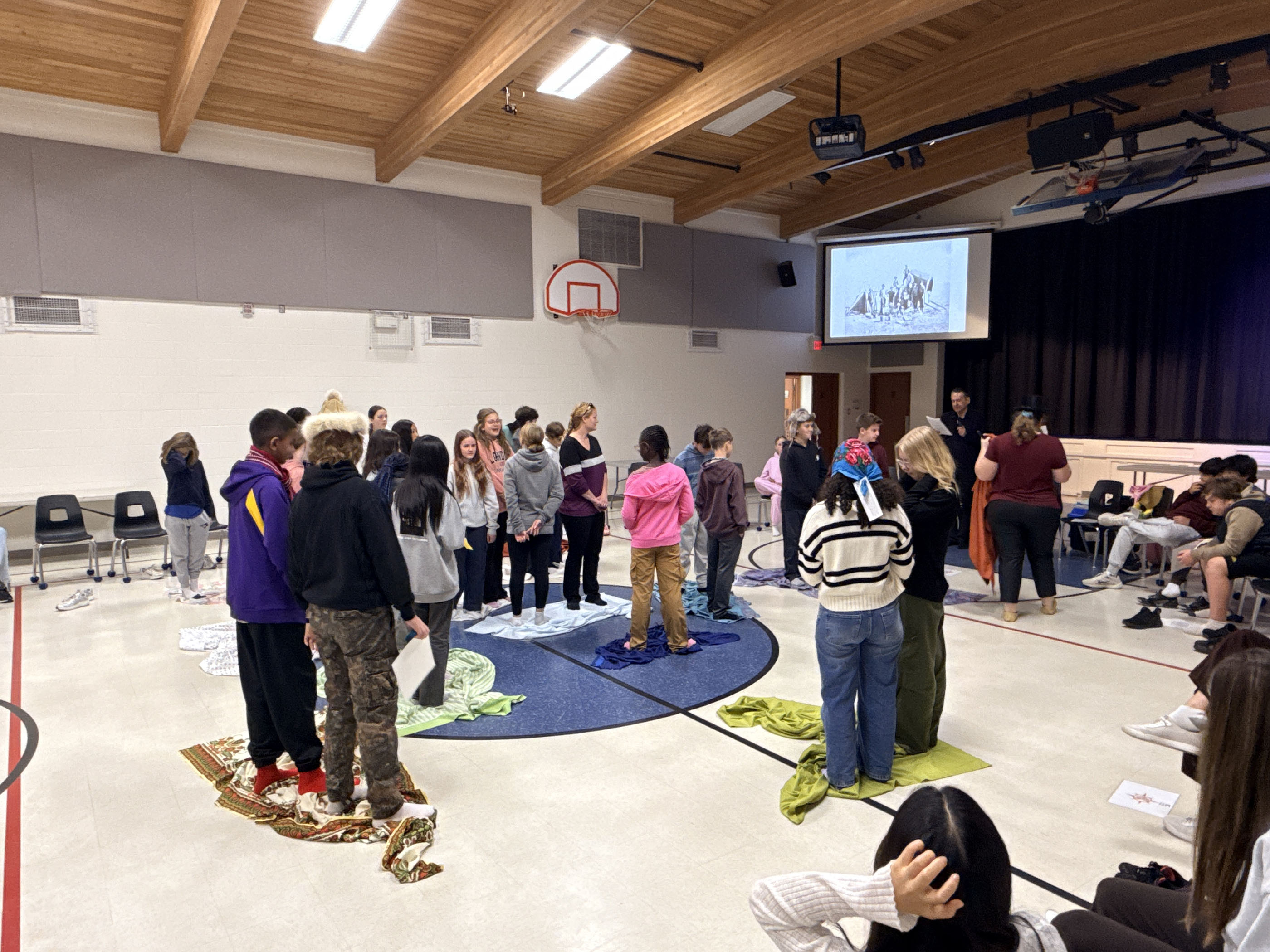
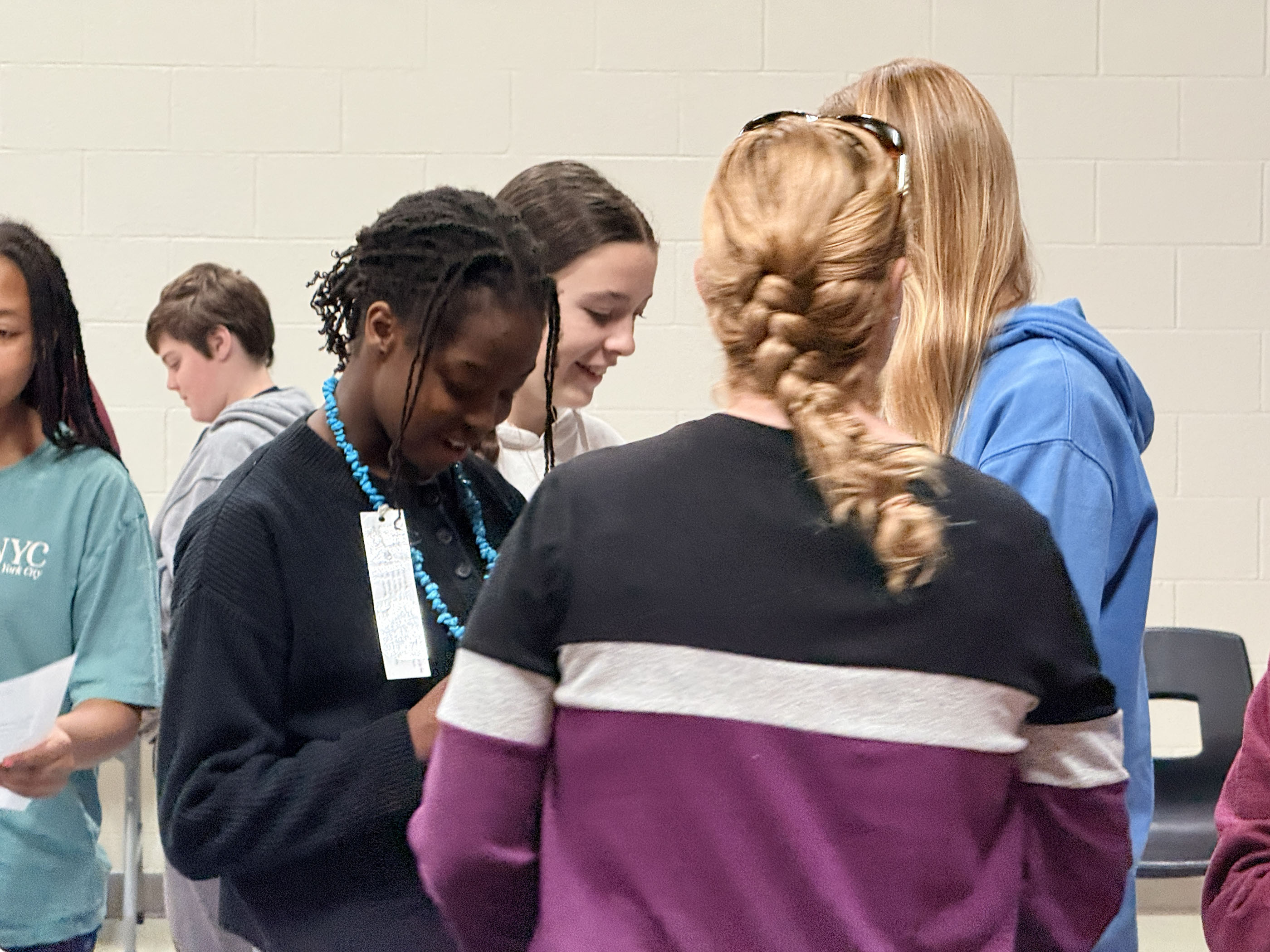
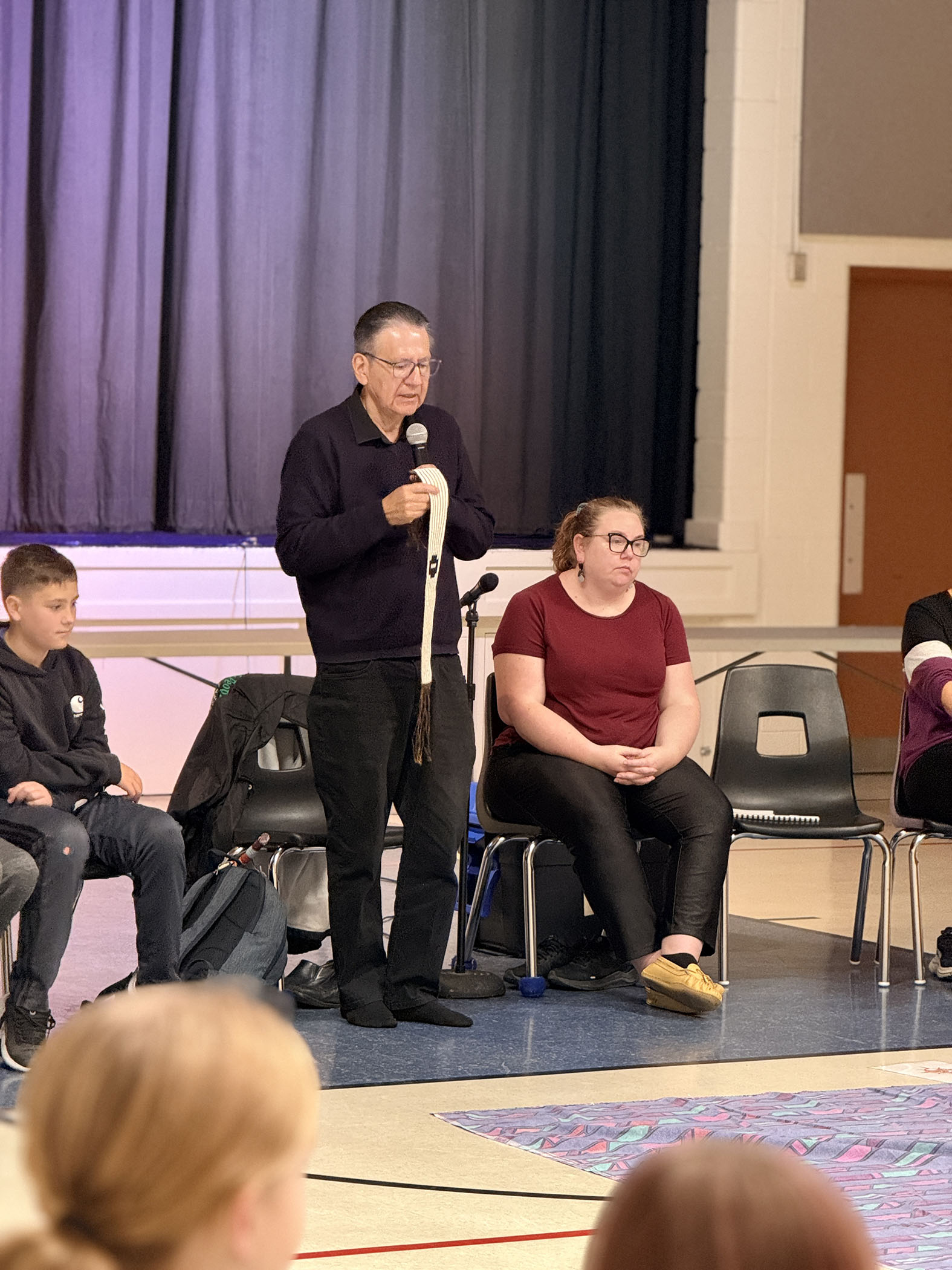
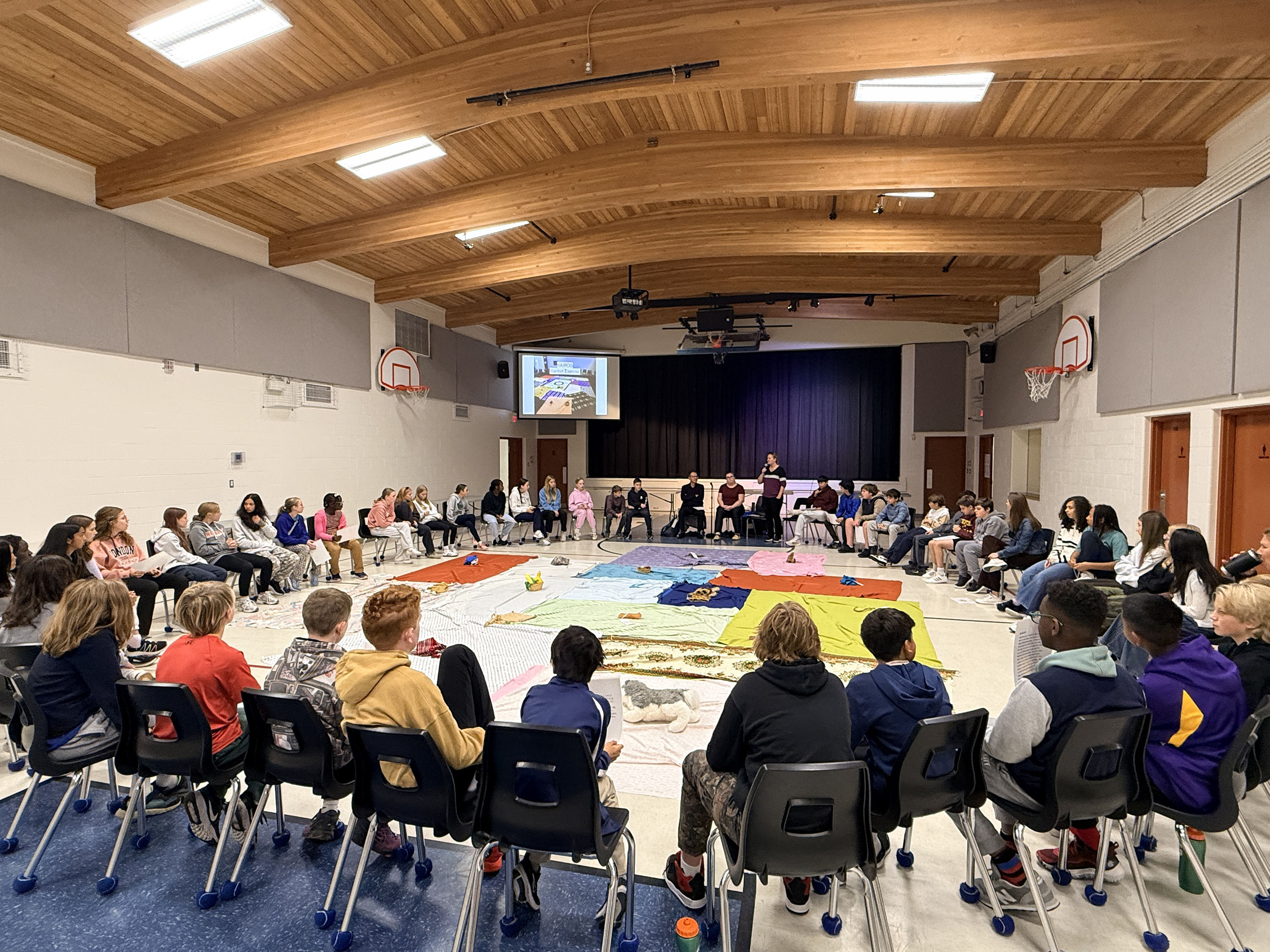
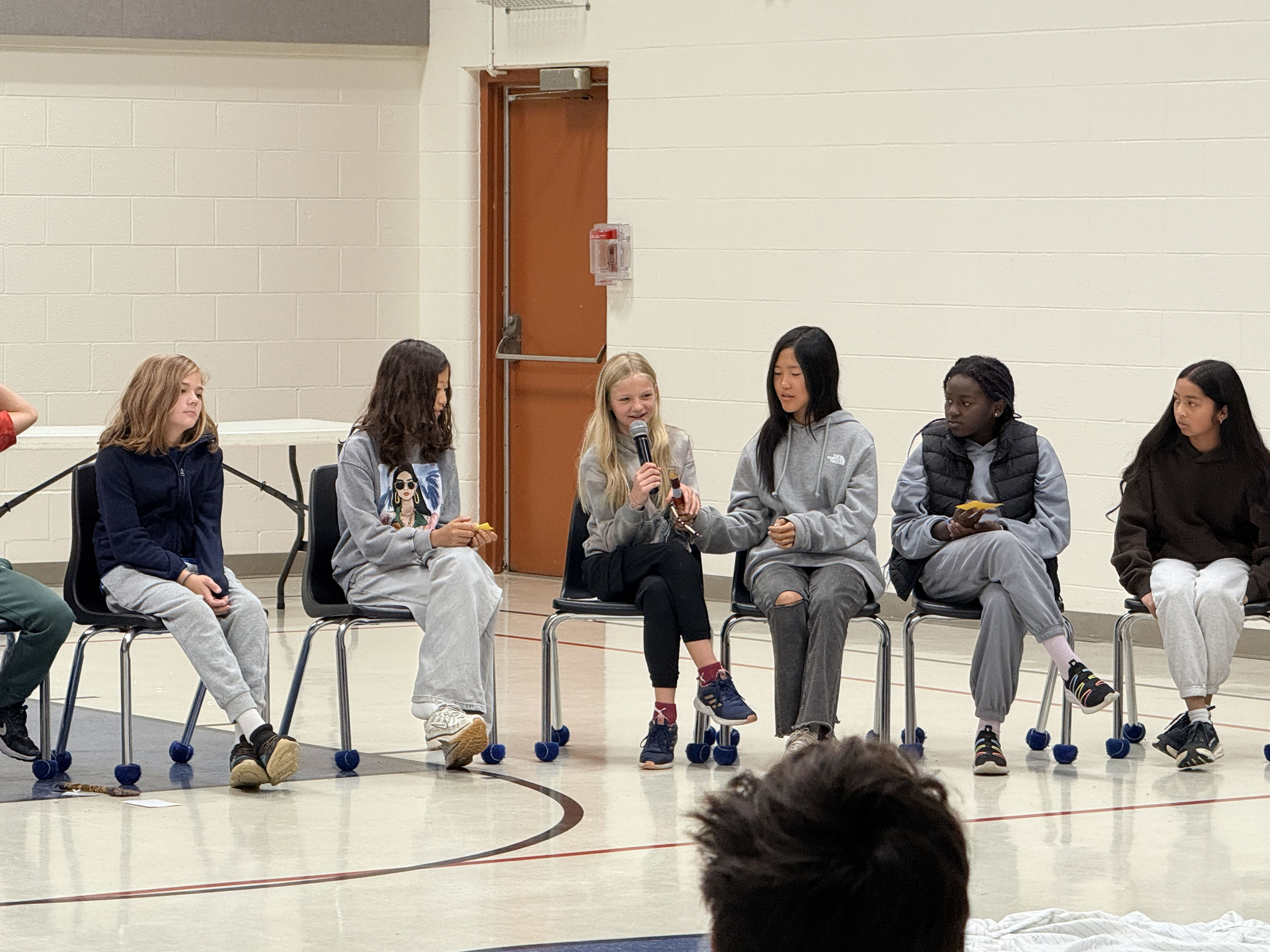
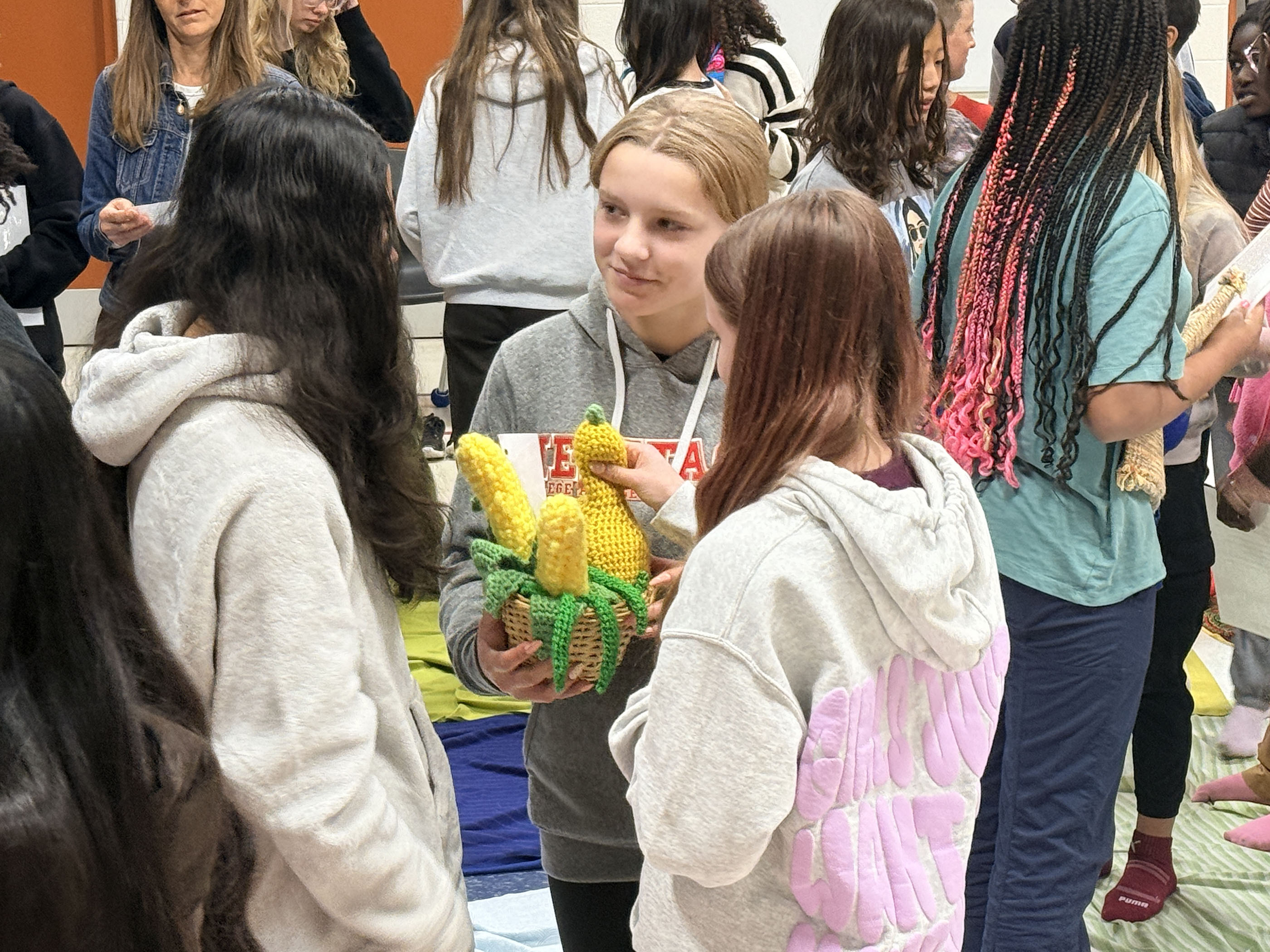
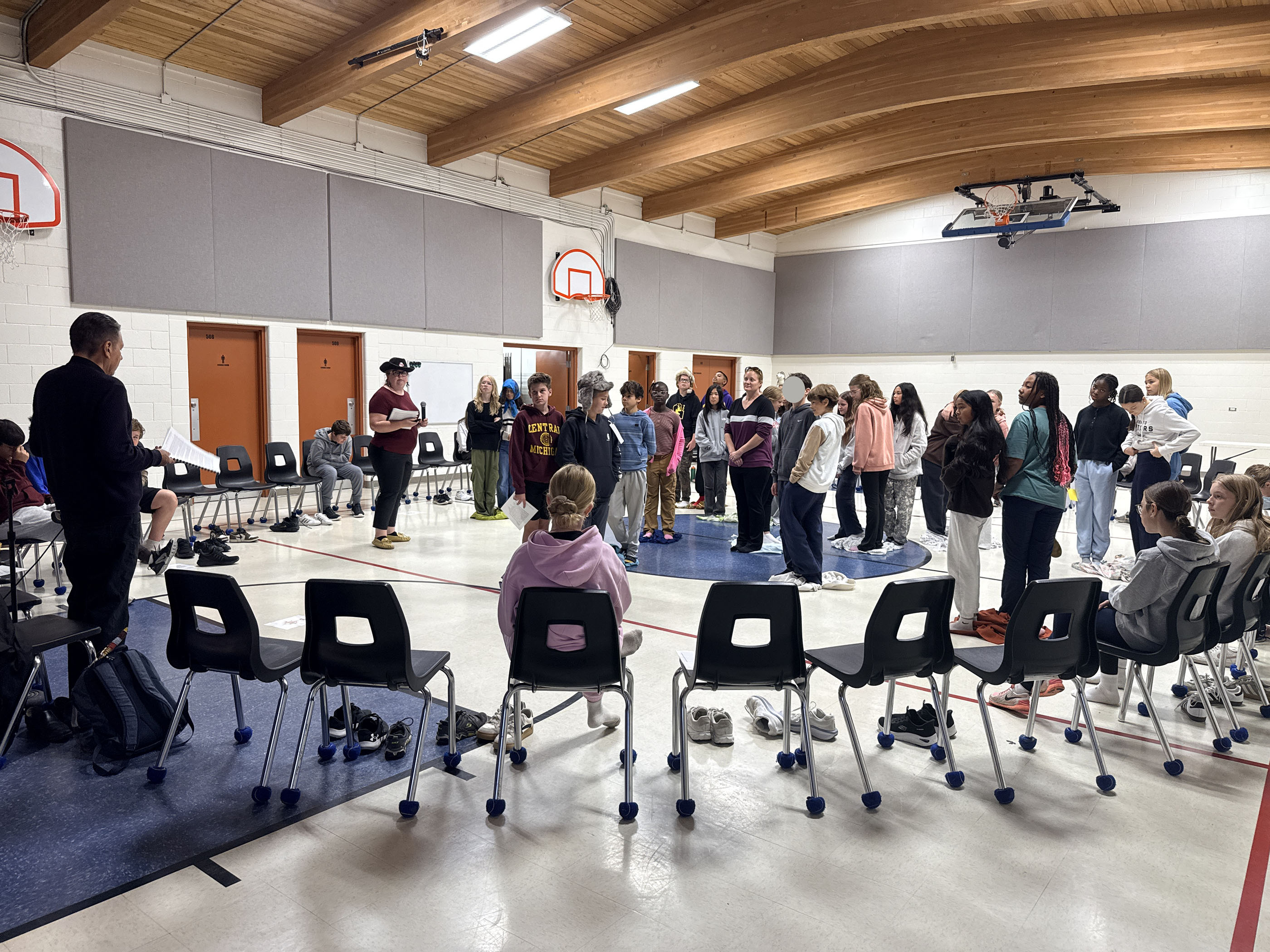
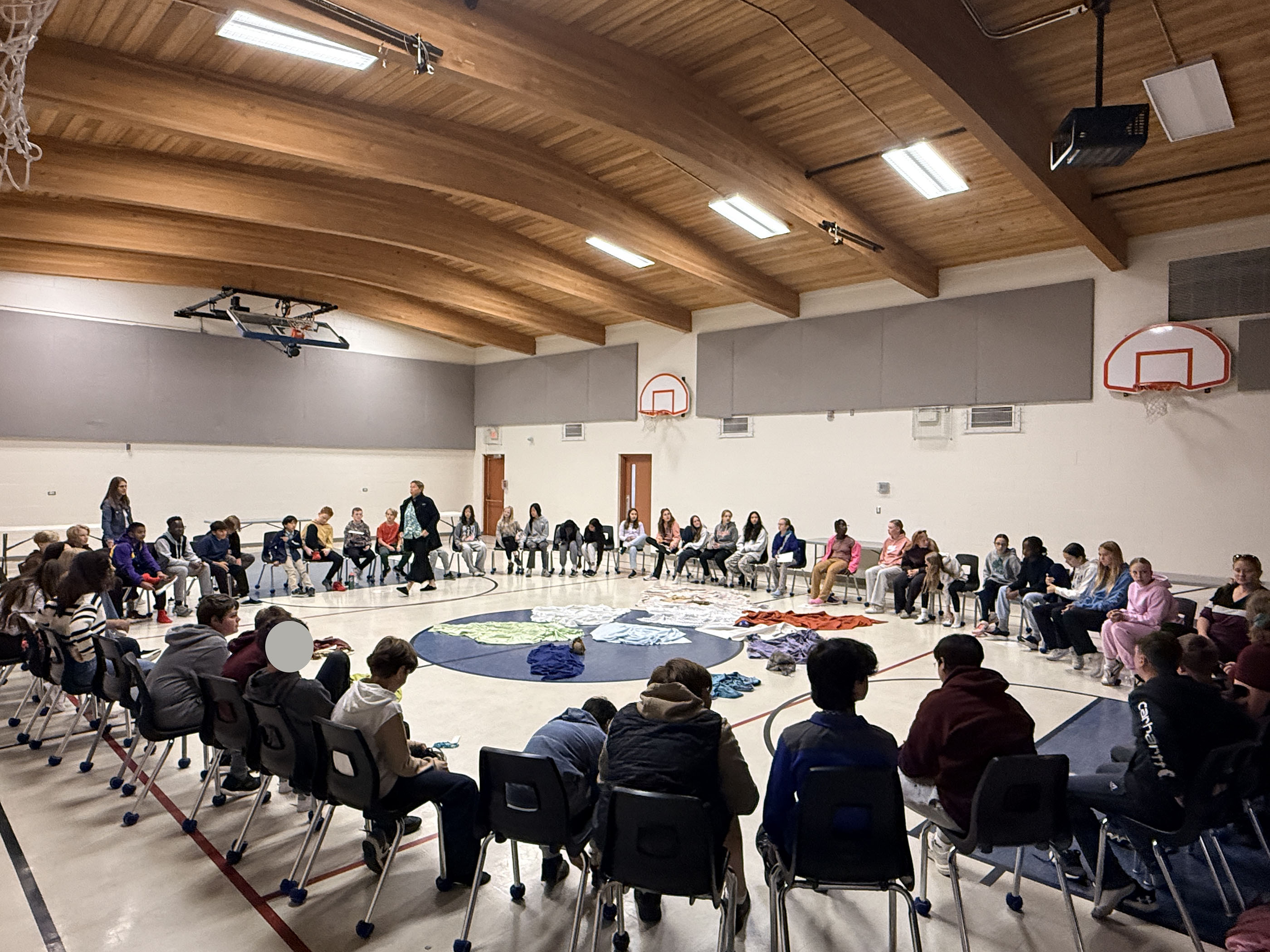
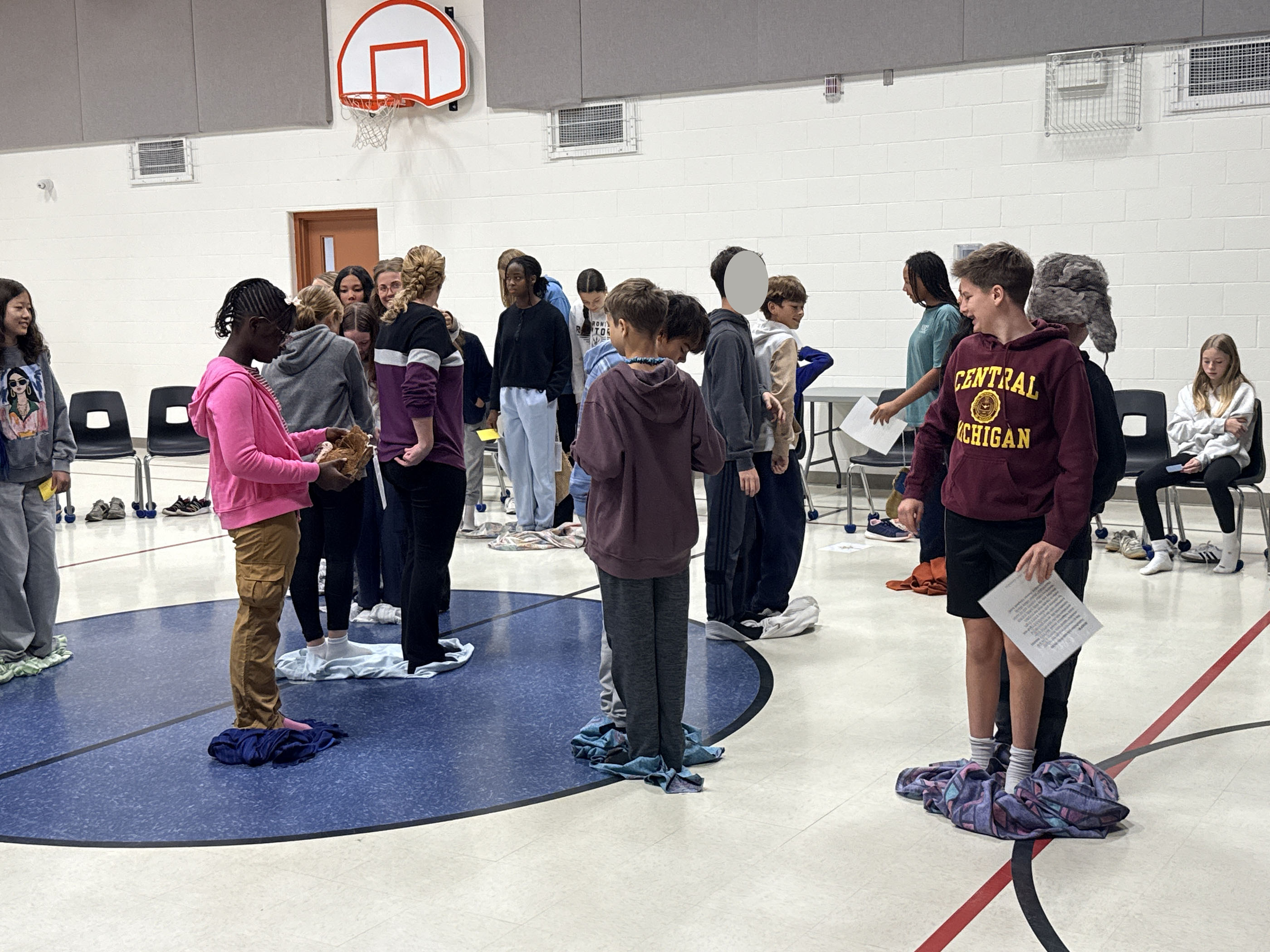
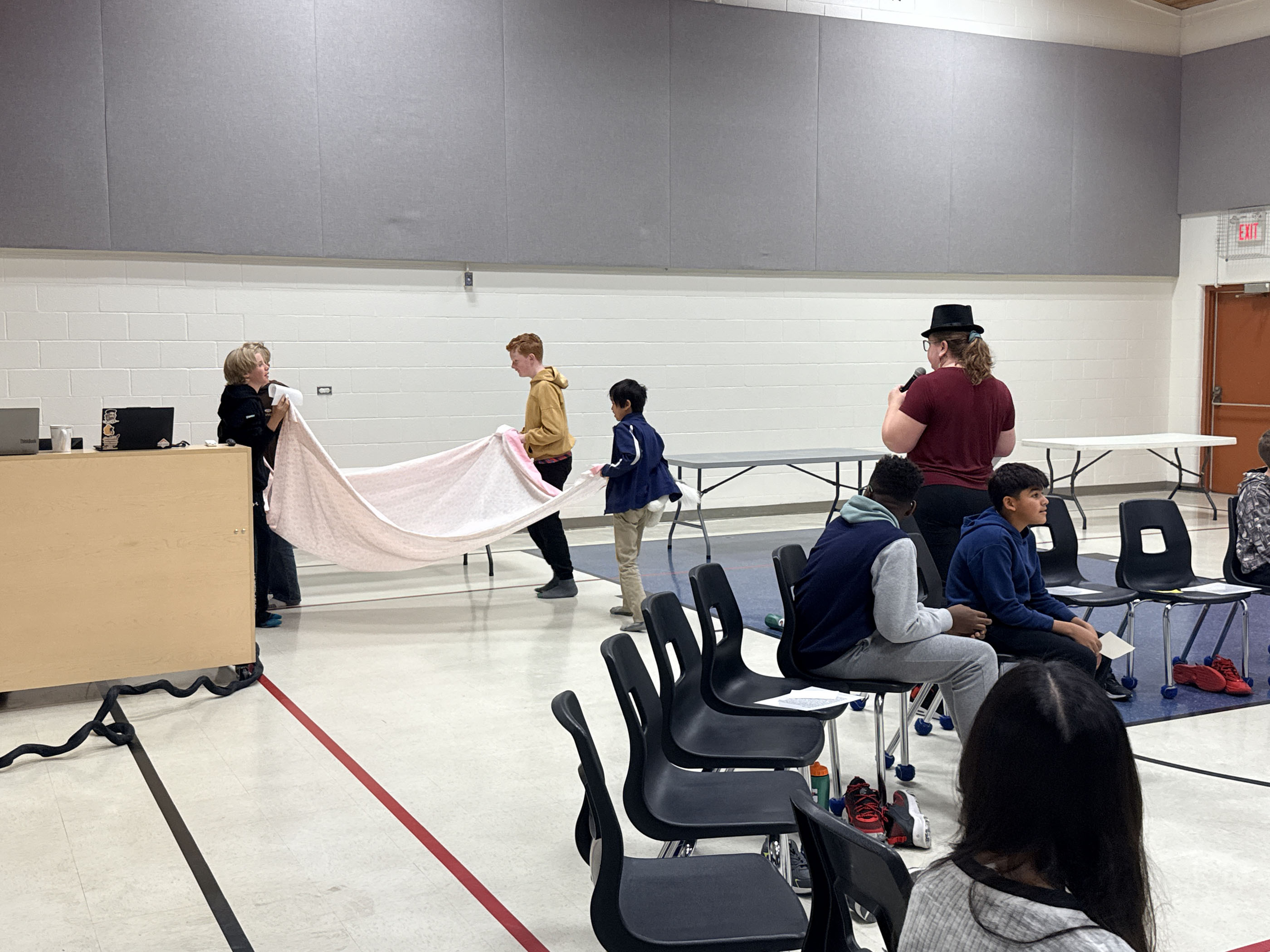
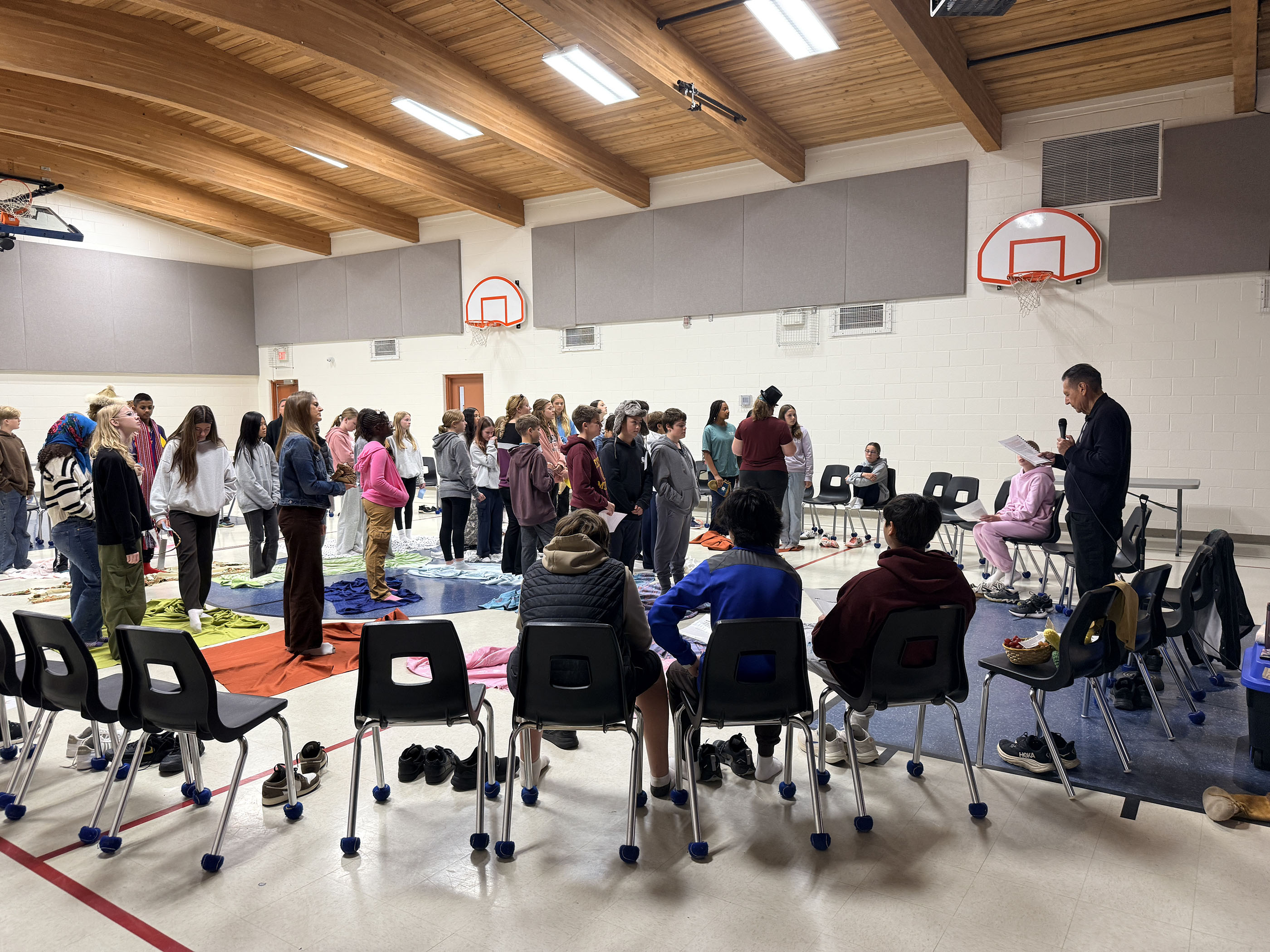
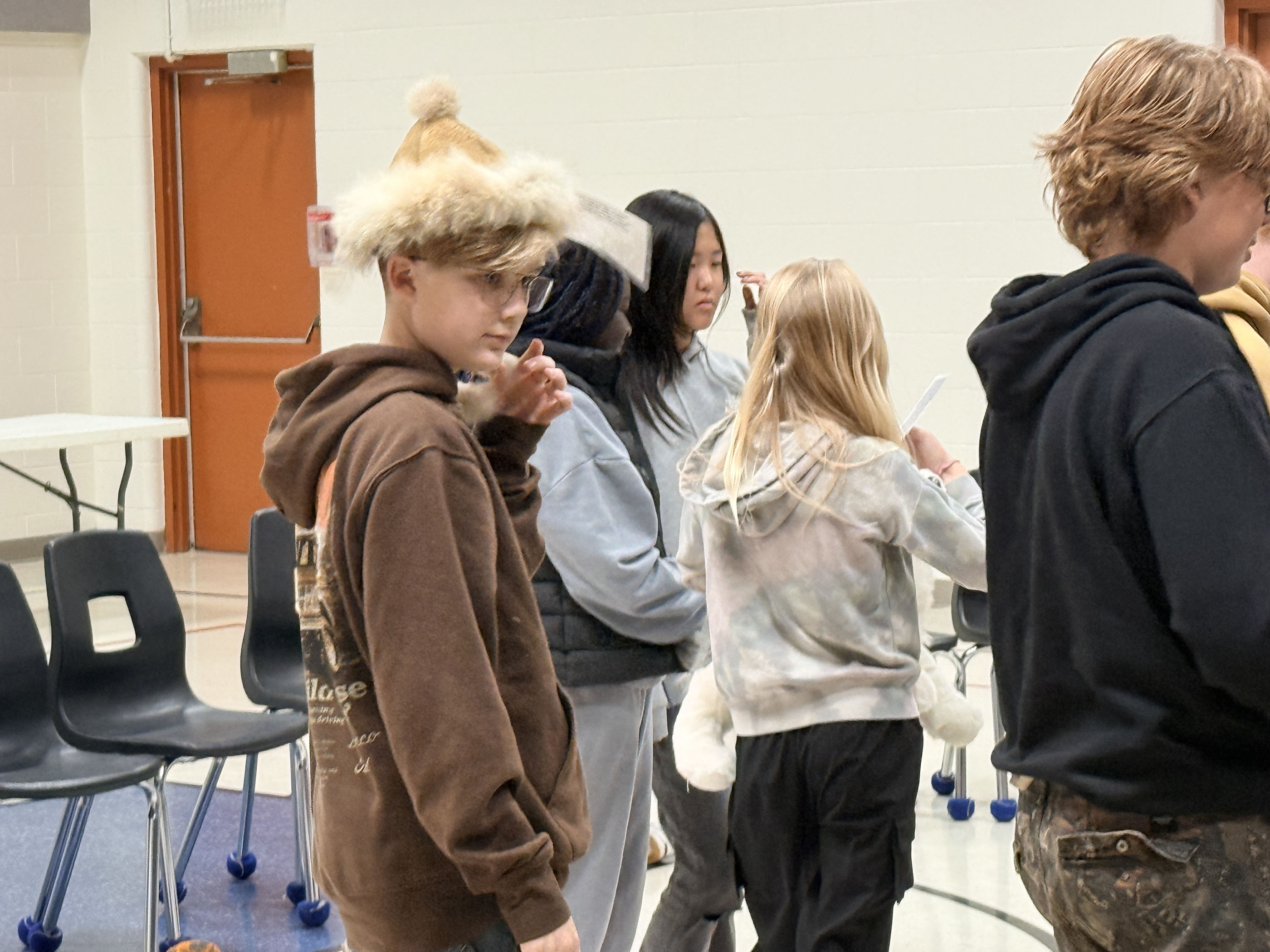
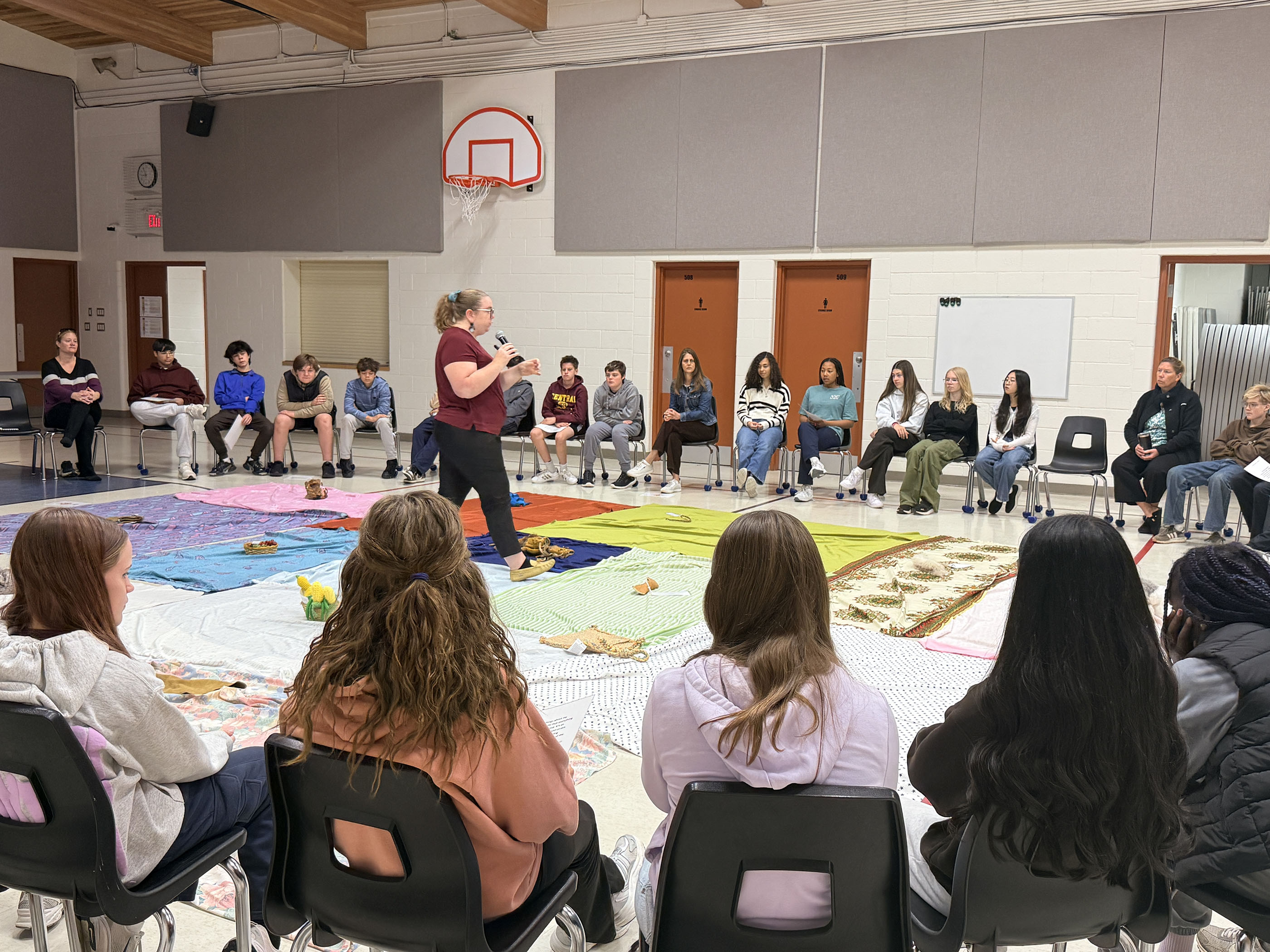
At GCCS, we want our students to grow in their understanding of the world around them and the people who share it. As part of their Grade 7 and 8 history learning, students are exploring the history of Indigenous peoples in Canada and the lasting impacts of colonization. On Monday, October 26th, we welcomed Adrian Jacobs and Cindy Stover from the Christian Reformed Church of North America’s Indigenous Ministry to lead our students through the KAIROS Blanket Exercise, an engaging, hands-on experience that brings this important part of our shared history to life.
Walking Through History Together
Have you ever wondered what it would be like to experience history from a different perspective? The KAIROS Blanket Exercise gives students an opportunity to do just that. Using blankets to represent the land, participants journey through the history of Indigenous peoples in Canada, beginning with life on the land long before European arrival. As the exercise unfolds, students learn about the arrival of Europeans, treaty-making, colonization, displacement and the many ways Indigenous peoples’ lives, communities and rights were affected over time.
As the blankets shift and change throughout the experience, students can see how dramatically Indigenous peoples’ access to their traditional lands was reduced. The exercise also illustrates how communities were displaced, families and communities were separated, and Indigenous rights were repeatedly disregarded.
This visual approach helps make history more tangible, moving beyond dates and events in a textbook to consider the real people, families and communities behind the stories.
Lessons That Stay With Us
Following the exercise, students had many new insights to reflect on as they considered how colonization affected Indigenous children, families and communities. Some of the details they learned were especially thought-provoking, highlighting just how deeply these historical events affected people’s lives and how their impacts continue today.
Students learned that Indigenous children who attended residential schools could lose the freedom to choose their own future. Even those who pursued further education and trained for professions such as law, medicine or military service could find themselves separated from their communities, creating painful choices between pursuing opportunities and remaining connected to their people and culture.
They also learned about the widespread displacement of Indigenous communities. When people were forced from their traditional lands, families and communities could be split apart, with people sent to different places across the country. The impact extended far beyond losing a home; it disrupted relationships, community connections and cultural ties that had been built over generations.
Another sobering realisation was how recently residential schools existed. The last federally operated residential school in Canada closed in 1996, within the lifetime of many people alive today. This helped students understand that these events are not simply distant history, but part of a legacy that continues to affect Indigenous families and communities.
Throughout the exercise, students also saw how dramatically the land Indigenous peoples had lived on and cared for long before European arrival was reduced as European settlement expanded. They were challenged to consider how Indigenous peoples’ rights, voices and relationships with the land were often overlooked or not respected as policies and decisions were made over the years.
By helping students see the human impact behind historical events, the exercise encourages them to look beyond what they may have previously understood and to consider whose experiences have been heard, whose have been overlooked and why those stories matter.
Learning to Love Our Neighbours Well
At GCCS, we believe that learning about history is not just about understanding what happened in the past. It also helps shape the kind of people we become and how we treat others.
As followers of Jesus, we are called to love our neighbours, show compassion and treat every person with dignity and respect. Learning about the experiences of Indigenous peoples invites us to listen with open hearts, acknowledge the painful parts of our shared history and consider what it means to build relationships rooted in understanding and reconciliation. The KAIROS Blanket Exercise gave our Grade 7 and 8 students an opportunity to engage with history in a way that was personal, visual and memorable. The things that stayed with them remind us how valuable it is to make space for learning that challenges our assumptions, deepens our understanding and encourages thoughtful questions.
Reconciliation is an important word and an equally important skill to learn. Whether we have hurt someone, misunderstood another person’s perspective or need to work through differences, reconciliation begins with a willingness to listen, learn and take steps towards understanding. It takes humility to acknowledge when something needs to change, compassion to consider another person’s experience and courage to work towards restoring relationships. As a school community, we want to help our students develop these skills and learn what it means to put Christ’s love into action, even when conversations are difficult or perspectives differ.
We are grateful to Adrian Jacobs and Cindy Stover for sharing their time and knowledge with our students and guiding them through this meaningful learning experience.
Would you like to learn more? Visit the Christian Reformed Church in North America’s Indigenous Ministry resources